top of page


Our Blog


Tree Care Basics: Properly Mulch a Tree
Should I put mulch around my trees? Yes! Chipped woody material, sometimes called "arborist chips," give the soil and your trees added nutrients, help retain much needed moisture, regulate soil temperature and reduce weeds. Combined, these can even help your tree grow faster. How do I properly mulch a tree? To properly mulch a tree, pread the mulch evenly around the tree, in a donut shape. Leave 3-6 inches around the trunk and avoid mounding the mulch against the trunk like


Bronze Birch Borer & Tree Management
What's happening to my birch tree? Here in the Pacific Northwest, the culprit could be a 1/2-inch long beetle called the bronze birch borer (BBB). You'll likely never see these insects. They lay eggs under the bark where the larva grow by feeding on the tree's sensitive cambium layer. Then, the adult beetle "chews" its way out and flys away to reproduce and repeat this cycle. The first signs of BBB activity are typically wilted leaves near the top of the tree. Twig and branc


Tree Care Basics: Watering
During periods without rainfall, trees should be thoroughly watered on a regular schedule. Slow, deep watering provides a cool drink for thirsty trees and creates a water reserve, much like filling up a sponge. Tree roots draw from the reserve until the next watering session. This encourages development of deeper roots and helps sustain trees during hot dry summers. A thick layer of woody mulch around your tree is also valuable to help retain soil moisture. Current science s
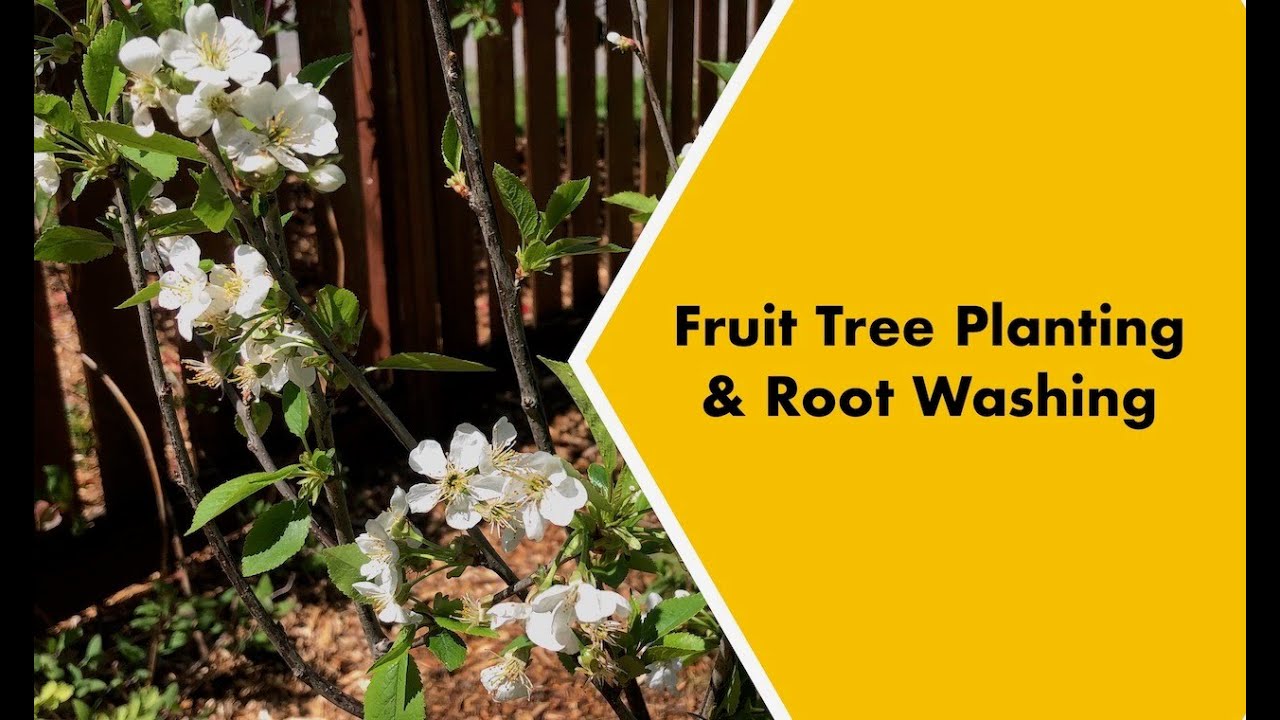
How to Plant a Small Tree
So you want to add a tree to your property? In this video, learn tips and techniques for how to plant a small tree, including root washing and pruning, preparing the planting hole, planting depth, watering and mulching. Contact Tree133 if you have questions about tree care on your property.


Create a Wildlife Snag in Your Landscape
Look up in a healthy forest and you'll likely see a snag - a standing dead or dying tree - often missing the top or most of the large branches. Snags provide rich habitat for birds, mammals and insects that use nearly every part of these "dead" trees. A healthy urban forest also includes snags. Portions of declining trees retained in residential yards provide critical wildlife habitat and a refuge for hundreds of creatures. Wildlife trees create opportunities to observe birds


Hazard Mitigation in Large Conifers
Two common "defects" in large conifers are codominant structure – multiple competing tops – and the development of "overextended" limbs beyond the natural canopy shape. Both of these increase the likelihood of a large failure and resulting consequences. However, there are proven methods to manage these conditions and provide peace of mind for homeowners. Subordination Pruning This technique for managing codominant structure “slows down” the growth of one leader and promotes


Tree Protection During Construction
We are used to looking up at trees. But look down at the base of the trunk and imagine roots extending 2x the width of the canopy (or more) all around the tree. The physics of trees are pretty amazing and often misunderstood. For instance, many people don't realize the most sensitive roots are found in the upper 6-12 inches of soil. This makes them easily susceptible to damage. However, they are not visible beneath a lawn or landscaping and thus are easily forgotten. Con


Cabling and Bracing in Small Trees
Trees are biologically designed to withstand wind and load. However, heavy foliage/fruit or a weather event may cause a split in a small tree. Tree133 recently completed a small cabling project on a redbud that split in last winter's snow. As the tree is a sentimental favorite of the homeowner, she had tried a variety of DIY solutions with limited results before calling for help. With careful reduction pruning to gently reshape the tree and installation of a cabling system, t


The Art and Science of Proper Pruning
While trimming small trees in the yard may seem like a simple DIY project, pruning is much more than simply sawing off limbs or giving the tree a "haircut" by removing outer foliage. If too much live tissue is removed, an otherwise healthy tree can become stressed or decline. Proper pruning is based on the scientific principles of plant physiology. It promotes beneficial growth, improves plant health, removes damaged limbs and can increase flower and fruit production (if desi

Minimizing Load Forces: TreeStuff Micro Rigging Lab
Craig was invited into the the TreeStuff Micro Rigging Lab at TCI Expo 2019 to talk about rigging angles to minimize load in the tree. Craig and Tree133 are committed to sharing our knowledge to help improve the safety and skills of fellow arborists. Submit a training inquiry to learn how we can help improve skills for you and your crew. * Read Joe Harris' article Working the Angles


The Tree Upon the Tree House
Hemlock Removal & Maple Reduction – Vashon Island, WA Until we saw this scenario first-hand, it was very difficult to envision… a failed Western Hemlock (Tsuga heterophylla) lodged against a tree house in a Big leaf Maple (Acer macrophyllum). Even after completing the work, it’s still hard to describe. The tree house was frequently used by the client’s children, and the declining Maple was already a concern. The tree was in severe decline with more than half of the canopy dea


The Pine Over the Playset
Scots Pine Removal – West Seattle, WA Dead trees pose a significant hazard as they begin to deteriorate. Limbs become brittle and can break unexpectedly or the entire tree can fail near the base. Depending on the tree’s location, complete tree removal may be the best – or only – option to mitigate risk to people/structures. At this site, a new children’s play structure had been installed directly under this Scots Pine (Pinus sylvestris). Completing this removal required advan


A Hidden Hazard Near High-Voltage Wires
Removal of Hollow Western Hemlock – Shoreline, WA Western Hemlocks (Tsuga heterophylla) are notorious for decay in the roots and lower trunk, caused by Heterobasidion annosum (annosus root rot) and other organisms. When the decay spreads, it becomes defused throughout the trunk and can cause sudden whole-tree failure resulting in property damage or injury. Declining limbs in the upper canopy are a common indicator of declining health and the need for a risk assessment. For th


A Hazard On the Hill
Pacific Madrona Removal – Kirkland, WA The Pacific Madrona (Arbutus menziesii) has one of the largest habitat ranges in North America. Populations of these unique trees are found along the Pacific Coast from British Columbia down to Mexico. In Canada, they are referred to as Arbutus. Here in Washington, we call them Madrona. From Oregon south, they are commonly referred to as Madrone. These trees prefer the forest edge with a mixture of sun and shade. They do not tolerate dr


The Sentinel at the Cemetery
Removal of Hollow Lombardy Poplar – North Seattle, WA Lombardy Poplar (Populus nigra ‘Italica’) trees can grow up to 150 feet tall. They are often planted in rows as “living walls” and privacy screens. Trees within the Populus genus, including Cottonwoods, Poplars and Aspen, are known for rapid growth and then rapid decline. This particular tree was located in a large cemetery in North Seattle. It had been previously pruned to remove dead limbs. The tree was declining furthe


The Oak Over the House
Hazard Reduction Pruning of Large Red Oak – Seattle, WA One of the largest and oldest Red Oaks (Quercus rubra) in the city of Seattle is rooted in a residential parking strip in Capitol Hill. With a trunk nearly 5 feet in diameter, this spectacular tree is nearly 120 years old. The massive canopy of this oak over the house spreads over 100 feet across a busy city street and six residential properties. In 2016, the property closest to the base of the tree was redeveloped. The


The Failed Limb Upon The Fence
Analysis of Big Leaf Maple Failure – Kirkland, WA This Big Leaf Maple (Acer macrophyllum) had failed before we arrived. The tree was...


The House Within the Apple Tree
Assessment of Apple Tree with Large Tree House – Kenmore, WA Many years ago, the client began building a tree house in an old apple tree. The project evolved and it became a three-story structure with significant weight. Was the Apple tree healthy, stable and strong enough for this use? Tree133 was asked to inspect the tree and provide guidance. This was an unusual project because the tree house was built in a relatively small tree. The homeowner had some structural engineeri


Classroom Construction and Cut Roots
Damage Assessment for a Large Douglas-Fir – Lynnwood, WA An elementary school was in process of building a new science classroom. The excavation and construction occurred within the dripline of two large Douglas-Firs (Pseudotsuga menziesii) that were each more than 30 inches diameter and over 100 feet tall. The term “dripline” describes the outer limit of branches and foliage. The area inside is the zone of greatest importance for tree health and stability. Root loss or damag

Angles, Redirects & Forces in the Tree: TreeStuff Micro Rigging Lab
At TCI Expo 2019, Craig was invited into the the TreeStuff Micro Rigging Lab to demonstrate climbing and rigging concepts. Watch as he explains rigging systems to reduce force in the tree and improve climbing safety. Contact Tree133 for specialized technical services and arborist skills training.
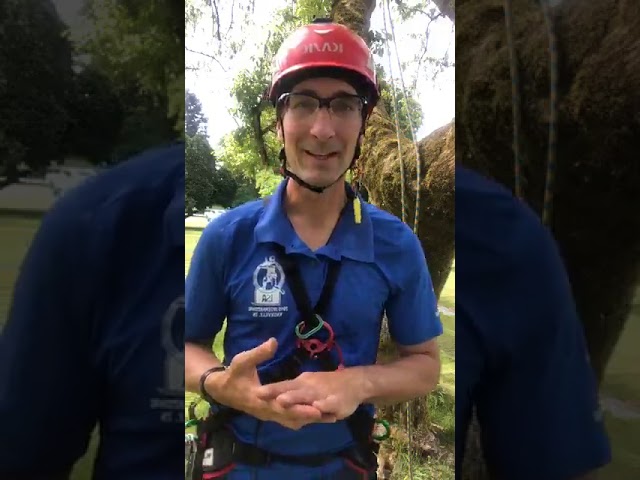
Work Positioning For Safety - TreeStuff Webinar
In this webinar for tree care professionals, Craig offers techniques for proper work positioning along with tips on making your tree climbing experience safer and easier. To learn more about professional training support for your team, contact Tree133 today ! Recorded on 5/29/20 at Evergreen Washelli Memorial Park in Seattle, WA.


Tree133: A New Look
If you live in or around Seattle, you might have seen our "big blue truck" and maybe our dog, Jack - he's the best "backseat driver" in the crew. The truck has served us well... but even with outstanding service and maintenance from the experts at Jeff's Auto - Sandpoint , it is time to retire this 16-year-old workhorse. So... We have just acquired a "new-to-us" truck. While it looks a bit burlier than planned, it provides Tree133 with the power and reliability we need to pul


Tree133: A New Team Member
We're excited to announce that Joanna Bachmann has joined the Tree133 team! Since our founding, Joanna has been supporting Craig and the...


Importance of Equipment Inspection: TCIA Podcast
If you are a climbing arborist, when was the last time you inspected your gear? Is there something in your bag that needs to be retired or replaced? Craig was invited to chat with Tchukki Anderson at TCIA about gear inspection for tree care professionals. Follow this link to listen on your preferred platform. Craig and Tree133 are committed to sharing our knowledge to help fellow arborists improve skills and safety on the job. Submit a training inquiry to learn how we can h


Climbing Gear: A Growing Risk to Tree Companies
August 2020: TCIA Magazine "In our roles as business leaders, supervisors, gear inspectors and safety trainers, we see tons of climbing gear. An alarming portion of that gear is unmaintained, poorly configured or beyond its reasonable service life. Those observations led us to ask, who is responsible for the condition of a climber’s life-safety equipment? Is it the climber or the company? Who is responsible when climbing gear fails? With a combined 23 years in this profession


A beautiful laceleaf maple in Pinehurst
Tree133 has worked on this beautiful laceleaf maple (Acer palmatum) for the past few years. In fall of 2019, we removed dead/decaying...

Modern Chainsaw Skills - TreeSfuff Field Edition
In this webinar for professional arborists, Craig Bachmann reviews proper cutting techniques and angles. Contact Tree133 for specialized technical services and arborist skills training.

Building for the Future: Tree Thinking Podcast
In this March 2021 episode of the Tree Thinking podcast, Craig Bachmann talked with the team about the value of mentorship, the future of...


Trees Support Each Other
Have you ever seen a tree that looks like it's propped up on legs? The tree likely grew on debris or sprouted on a nurse log, rather than rooting directly in the ground. This Western hemlock (Tsuga heterophylla) in the Lake City neighborhood in North Seattle had died and was going to be removed. It was possible to excavate around the roots and actually see the structure and nurse log. For 40-50 years, the nurse log provided ground cover and reduced soil erosion around the r


Leyland cypress - "An alligator in the bathtub"
Leyland cypress (Cupressus x leylandii) is a hybrid species resulting from a cross between the Alaskan cedar (Chamaecyparis nootkantensis) and the Monterey cypress (Cupressocyparis macrocarpa) . It is a popular choice for privacy screening because of its extremely fast growth rate - quickly growing 40-60 feet high and over 15 feet wide. In prime growing conditions, they can reach 100 feet tall and 50 feet wide. In the Pacific Northwest, Leyland cypress is often an inexpens


Thinking Critically About Life Safety Carabiners: TCI Magazine August 2021
Check out Craig's newest article for tree care professionals in this month's TCI Magazine: Thinking Critically About Life Safety...

SRS Canopy Anchor Demo: TCIA EXPO '21
A canopy anchor is a climbing system that anchors the rope in the canopy of a tree. While a moving rope system (MRS) typically uses a...

Preserving Urban Wildlife Habitat
Birds, insects and small mammals all use trees for nests, nurseries, storage areas, foraging, roosting, and perching. If a tree needs to be removed, rather than cutting it to the ground, it may be possible to retain valuable habitat with a snag. In this video, Karsten explains how arborists help preserve urban wildlife habitat, imitate wood breaks that happen naturally and create bird boxes to provide nesting cavities. Want to learn more about snag trees? Living with Wildlif

TreeU Arborist Chainsaw Qualification
Tree133 is excited to partner with TreeU for this professional arborist qualification program. During a half-day video-based training,...


Contract Climbers: An Untapped Training Resource
The June 2022 TCIMagazine, a leading publication for professional arborists, featured an article by Craig Bachmann, the manager and Lead Arborist at Tree133. Learn about how contract climbers can support your business in both a professional training capacity and job profitability. For the complete article, click here . See Craig at a Professional Event in 2022 After a few years of virtual presentations, Craig is excited to be back on the road for a busy season of presentation


Tree133: Registered Tree Service Provider
In April 2022, Seattle City Council passed Council Bill 120207 requiring that all tree service companies must be REGISTERED with the...


Tree133: 2023 Urban Canopy Leadership Summit
On a sunny day in November, urban forestry leaders, advocates and researchers from around the world gathered to climb some of the largest...


Discovering Forestry: Customer Education to Preserve Trees
On a recent episode of the industry’s only podcast focused on all things tree and landscape, Craig Bachmann - Lead Arborist and Company...


Building Community: How a Tree Preservation Company is Making a Difference for Neighbors
A Tree Preservation Company in the Community As a local, family-owned business, Tree133 is deeply connected to our Seattle neighbors. As professional arborists, we are primarily a tree preservation company. We also support our community through volunteering and donations to local organizations. The Low Income Housing Institute (LIHI) LIHI provides housing for low-income, homeless and formerly homeless people to help them develop self-sufficiency. Tree133 has specifically


Tree133: Learning new arborist skills at TCI Expo 2023
The professionals and arborists of Tree133 recently attended TCI Expo 2023. This is the world's largest tree-related conference and trade...
bottom of page